
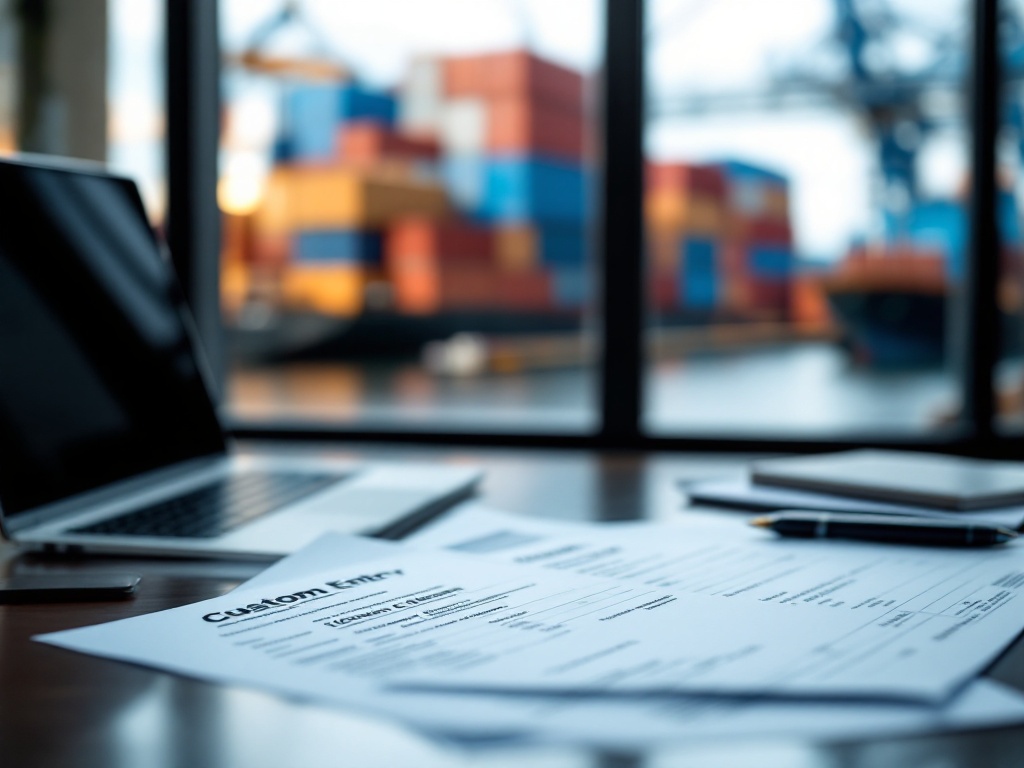
The Process of Importing Goods from China
Importing from China follows the same sequence every time. Here is each stage, what can go wrong at it, and what to have ready so your goods clear and arrive on schedule.
Key takeaways
- ✓ Most delays start at the factory, not the port: wrong labels, short counts, or missing documents.
- ✓ Set up your importer of record number and customs bond before the first order ships.
- ✓ Classification decides your duty rate. Confirm the HTS code before you agree a price.
- ✓ Inspection before the balance payment is the cheapest place to fix a problem.
1. Find and vet the supplier
Start with a shortlist, not a single factory. Compare quotes on price, minimum order, lead time, and export experience, and confirm the company is a real, registered manufacturer rather than a middleman. A sourcing agent in China can do this on the ground.
2. Samples, then the purchase order
Approve samples before you commit, ideally collected from several factories and shipped to you together. Your purchase order should set the specification, packing and labeling rules, the Incoterm, and the payment terms.
3. Set up the US side
Every import needs an importer of record. For most businesses that is the company EIN, registered with CBP. Formal entries, generally shipments over $2,500, need a customs bond. A continuous bond covers a year of imports and suits anyone shipping more than a few times.
4. Classify the product and cost it
Every product has an HTS code, and that code sets the duty rate. Goods from China usually add a Section 301 tariff on top. Check the classification and total the landed cost per unit before you finalize the order, not after the goods land.
5. Inspect before the balance is paid
A pre-shipment quality inspection checks quantity, workmanship, labels, and packing while you still hold leverage over the supplier. Fixing a problem in China costs a fraction of fixing it in the US.
6. Book freight and file the ISF
Once goods are ready, freight is booked by sea or air. For ocean cargo the Importer Security Filing (ISF 10+2) must be transmitted at least 24 hours before loading in China. A late or wrong ISF can draw a penalty of up to $5,000.
7. Customs entry, duty, and release
As the cargo approaches the Ports of Los Angeles and Long Beach, the broker files the entry and pays duties, taxes, and fees such as the merchandise processing fee and, for ocean cargo, the harbor maintenance fee. CBP releases the goods, or selects them for an exam, which adds time.
8. Delivery and records
Released goods are delivered to your facility or to Amazon. Keep your import records for five years. CBP can ask for them.
What changes when the goods are going to San Diego
Very little Asia container traffic calls directly at San Diego, so ocean cargo for San Diego businesses clears at Los Angeles or Long Beach and trucks south, about two hours. Budget that leg into your delivered cost. San Diego importers who also buy from Mexico can combine an ocean lane from China with land freight through Otay Mesa, and it pays to use one broker for both so the entries, bond, and classifications line up.
Frequently asked
How long does the whole process of importing from China take?
For a new product, allow several weeks for sourcing and samples, then production time, then transit. Sea freight to Los Angeles and Long Beach is about 16 to 24 days port to port, plus a day or two of trucking to San Diego.
Can I import from China as a small business?
Yes. Many of our clients are businesses just starting to import. You need an EIN, a customs bond for formal entries, and a supplier who can produce export documents.
Can I skip stages and just use you for customs?
Yes. Customs clearance on its own is welcome, and so is help with any single stage.
Related services & guides
How It Works, End to End
Talk to a broker →
Sourcing Agent in China
Talk to a broker →
Pre-Shipment Inspection
Talk to a broker →
Import from China, Door to Door
Talk to a broker →
How to Ship from China to the USA
Read the guide →
DDU vs DDP Shipping
Read the guide →
How to Import Furniture from China
Read the guide →
Let a licensed broker do it.
Tell us what you import and how often. A bilingual broker responds fast, usually within one business day. Quotes are for businesses with recurring commercial shipments.
What to include for an accurate quote
The more of this you share, the faster we can price it. Quotes are for businesses with recurring commercial shipments.
- Origin: supplier or factory city and country
- Destination: delivery city and ZIP code
- Product: what it is, and the HS code if you have it
- Quantity: units and number of cartons or pallets
- Weight: total gross weight
- Size: carton dimensions or total volume in CBM
- Shipping method: ocean FCL, ocean LCL, air, or express
- How often you ship: monthly, quarterly, or your next few orders