Freight that clears Otay Mesa on schedule, both directions
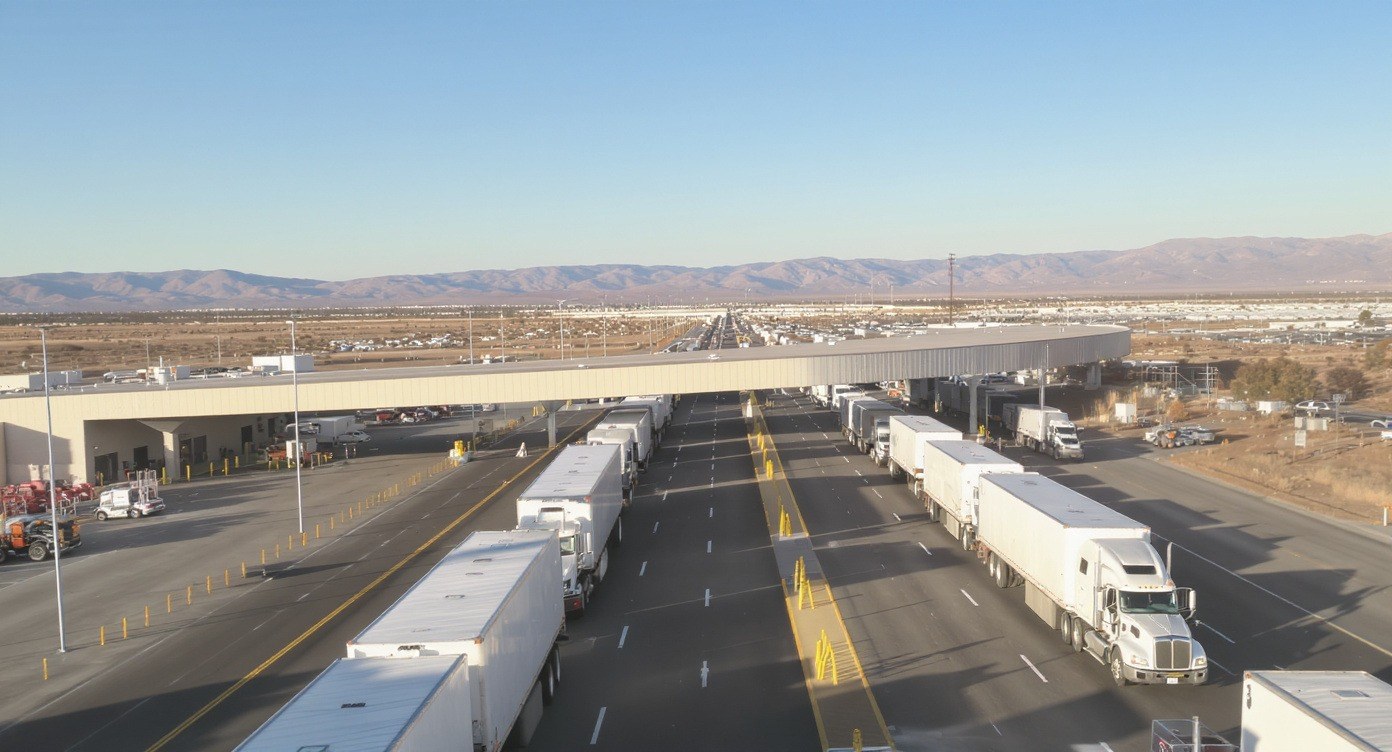
We coordinate the crossing itself at San Diego and Otay Mesa, one of the busiest commercial land ports on the southwest border. Drayage, transloading, and in-bond moves handled so your load does not sit at the line waiting on paperwork or a missed carrier handoff.
What border services actually cover
Clearing an entry is one job. Getting the physical freight across the line is another, and at Otay Mesa the two have to be timed together. Border services means coordinating the crossing: making sure the manifest, the barcode, the driver, and the clearance all line up at the booth, then handing the load off to the right carrier on the other side. It covers northbound US imports and southbound Mexico exports, because most cross-border freight moves in both directions and each leg has its own customs authority.
When any piece is out of sync, the load stops. A driver arrives without a valid ACE e-Manifest or PAPS barcode and gets turned back. A Mexican carrier cannot drive into the US interior, so freight that was supposed to transload sits on the wrong trailer. A shipment that should have moved in-bond gets forced into a full entry at the border instead of clearing inland. We manage those handoffs so a crossing that should take hours does not turn into days.
What’s included
- ✓ Crossing coordination at Otay Mesa and the San Diego commercial ports of entry, timed to CBP and Mexican customs operating hours
- ✓ Drayage scheduling between border yards, warehouses, and your US or Mexico carrier
- ✓ Transloading and cross-dock transfer from Mexican trailers to US long-haul equipment, and the reverse for exports
- ✓ In-bond moves under CBP bond (immediate transportation, transportation and exportation, and immediate exportation) so cargo can clear at an inland port instead of the border
- ✓ ACE e-Manifest filing and PAPS/PARS barcode setup so drivers are not turned back at the booth
- ✓ FAST lane and C-TPAT-aligned handling for qualified, trusted-trader shipments
- ✓ Northbound US import clearance coordinated with southbound Mexico export work through your agente aduanal
- ✓ Live status when a load is at the line, and a clear plan when a shipment is pulled for X-ray or physical inspection
How we handle it
Pre-crossing prep
We confirm the commercial invoice, HTS classification, and quantities match, file the ACE e-Manifest, and issue the PAPS or PARS barcode the driver needs. Errors get caught before the truck is at the border, not after.
At the line
The driver presents at Otay Mesa with clearance already filed against the barcode. We track the crossing in real time and respond immediately if CBP flags the load for inspection or documentation review.
Transload or drayage handoff
Because Mexican carriers generally cannot run into the US interior, we coordinate the transfer to a US long-haul carrier at a border yard or cross-dock, or arrange drayage to your nearby warehouse.
Release and inland move
On release we close out the entry, or set the freight moving under an in-bond bond to an inland port for clearance there. You get the delivery confirmation and the paperwork for your records.