
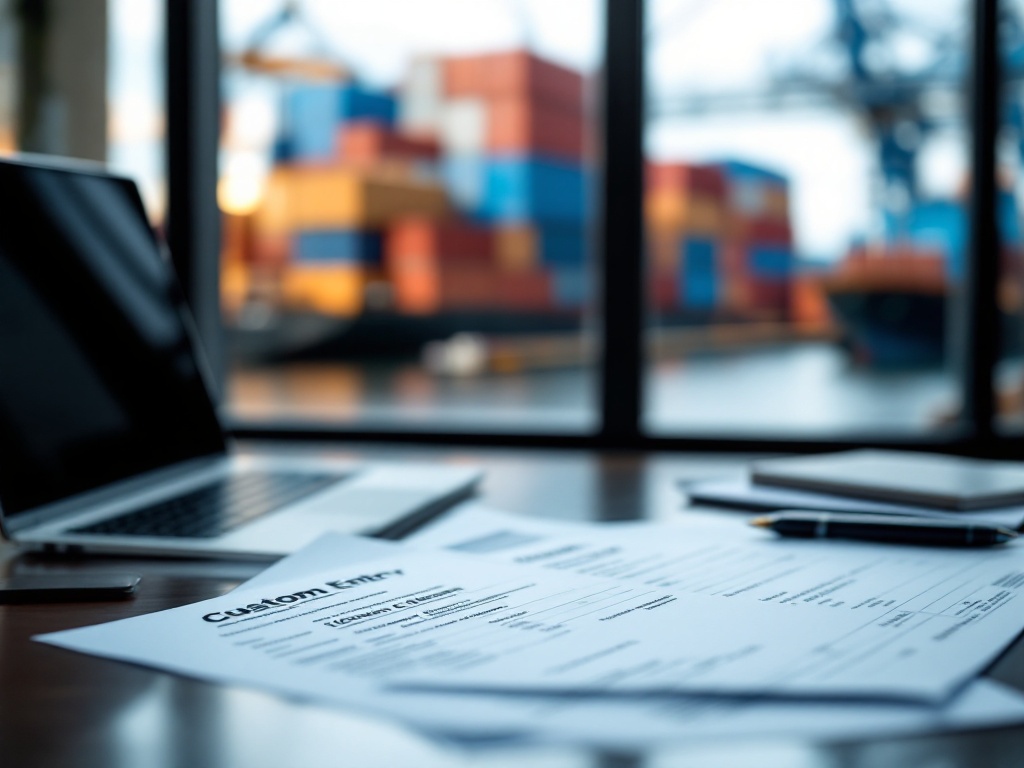
Do You Need a Customs Broker?
Do you need a customs broker? Learn when one is legally optional, when self-filing works, formal vs informal entry, and the liability you carry either way.
Key takeaways
- ✓ A U.S. customs broker is legally optional, but a Mexican agente aduanal is effectively required to clear the pedimento, so the answer depends on direction of travel.
- ✓ The importer of record keeps full legal liability under the reasonable care standard no matter who files, which means a broker reduces risk but never removes it.
- ✓ Informal entry (generally $2,500 or less, no bond) is the realistic self-file case, while formal entry above $2,500 needs a bond, an ACE filing, and usually a broker.
- ✓ Getting classification, valuation, or ISF wrong triggers penalties, back duties, interest, and cargo holds, so complexity, value, and regulation are the signals to hire a professional.
The honest answer for U.S. imports is no. No federal law forces you to hire a customs broker. U.S. Customs and Border Protection (CBP) treats the broker as a convenience, not a requirement, and any importer of record is allowed to prepare and file their own entries. But “allowed to” and “should” are two different questions, and the gap between them is where most people get into trouble.
This guide separates the two. It covers when a broker is genuinely optional versus when it becomes a practical necessity, what self-filing actually demands of you, how informal and formal entry differ, and the liability you keep no matter who files. Because the San Diego and Otay Mesa border moves cargo in both directions, it also explains why the answer flips depending on whether goods are entering the United States or entering Mexico.
The Short Answer Depends on Which Direction You Are Going
For a U.S. import, a customs broker is legally optional. CBP allows the importer of record to transact their own customs business directly, and the agency says so plainly. You can classify your own goods, file your own entry, and pay your own duties without ever hiring a licensee. Most commercial importers still use a broker, but that is a business decision about risk and time, not a legal mandate.
For a Mexican import or export, the picture is very different. Mexico’s system is built around the licensed customs broker, the agente aduanal, who prepares and validates the pedimento (the official Mexican customs declaration). In practice, clearing goods into or out of Mexico almost always runs through a licensed agente aduanal. That is why cargo crossing at Otay Mesa typically involves two separate professionals: a U.S. customs broker for the CBP side and a Mexican agente aduanal for the pedimento side. They are not interchangeable, and a U.S. broker license does not authorize anyone to file in Mexico.
- U.S. import: broker is optional by law, common by choice.
- Mexico import or export: a licensed agente aduanal is effectively required for the pedimento.
- A cross-border move at Otay Mesa usually needs both, one per country.
When a Broker Is Optional Versus When It Is Really Needed
A broker is most defensible as optional when the transaction is small, simple, and unregulated. A one-time personal shipment, an informal entry under the formal-entry threshold, or a single low-value commercial item with a clear tariff classification and no other agency involvement are all situations where a motivated importer can reasonably self-file.
A broker moves from optional to strongly advisable the moment complexity, volume, or regulation enters the picture. Formal commercial entries, goods regulated by a Partner Government Agency, uncertain classification, and any need for a continuous customs bond all raise the cost of a mistake far above the cost of professional filing.
- Reasonable to self-file: one-off shipments, informal entries, simple unregulated goods with an obvious HTS code.
- Strongly advised to use a broker: formal entries over the $2,500 threshold, repeat commercial importing, and shipments where a wrong code changes the duty rate.
- Almost always use a broker: goods under FDA, USDA, EPA, or other PGA rules, antidumping or countervailing duty merchandise, quota or licensing goods, and anything where valuation or country of origin is contested.
- Ocean freight: if goods arrive by vessel, someone must file the Importer Security Filing (ISF 10+2), which most importers hand to a broker or forwarder.
What Self-Filing Actually Requires
Self-filing is not just “skipping the broker fee.” To clear a formal entry yourself you must act as the importer of record, which means you obtain a customs bond, determine the correct Harmonized Tariff Schedule (HTS) classification and valuation under the legal standard of reasonable care, file the entry documents (CBP Form 3461 for release and CBP Form 7501 for the entry summary), pay duties, taxes, and fees, and satisfy any PGA requirements before release.
The mechanical barrier most self-filers hit is the filing channel itself. Electronic entries move through CBP’s Automated Commercial Environment (ACE) using Automated Broker Interface (ABI) software, and getting certified for ABI as an individual importer is rarely practical for occasional shipments. That leaves paper filing at the port or leaning on a broker anyway. A broker earns their fee by owning the classification, the ACE filing, the bond arrangement, and the PGA coordination, but note the key limit below: hiring one does not transfer your legal responsibility.
- Become the importer of record and post a bond (single-transaction or continuous).
- Classify goods correctly under the HTS and value them under reasonable care.
- File CBP 3461 and 7501, pay duties and fees, and clear any PGA holds.
- Handle ACE/ABI filing, which is the practical wall most individual self-filers run into.
Informal Versus Formal Entry, and Where the $2,500 Line Sits
The type of entry drives much of the broker question. Informal entry generally applies to commercial shipments valued at $2,500 or less. It is simpler, usually does not require a customs bond, and CBP itself often classifies and liquidates the entry. This is the zone where self-filing is most realistic.
Formal entry is generally required for commercial shipments valued above $2,500, and it requires a customs bond and a filed entry summary on CBP Form 7501. Some goods require formal entry regardless of value, including merchandise subject to quota, and certain regulated or restricted commodities. Below the commercial thresholds sits Section 321 de minimis, which historically allowed shipments valued at $800 or less to enter free of duty and tax, one shipment per person per day. That de minimis privilege has been narrowed by regulatory action, so it should not be assumed to apply automatically to every low-value shipment today. On the fee side, formal entries carry a Merchandise Processing Fee of 0.3464 percent of the goods’ value, subject to a minimum and maximum that CBP adjusts annually, and ocean shipments also carry a Harbor Maintenance Fee of 0.125 percent.
- Informal entry: generally $2,500 or less, usually no bond, CBP may classify. Self-filing friendly.
- Formal entry: generally above $2,500, bond required, CBP 7501 entry summary.
- Always formal regardless of value: quota goods and certain regulated or restricted commodities.
- Section 321 de minimis ($800 or less) exists but has been restricted, so confirm eligibility rather than assuming it.
The Risk of Getting It Wrong
The single most important fact in this decision is that liability stays with the importer of record. Under the reasonable care standard in the customs statute, you are responsible for the accuracy of classification, valuation, country of origin, and marking, whether you filed the entry yourself or paid a broker to do it. A broker’s error can become your penalty. Choosing a broker is buying expertise and a lower error rate, not buying an escape from responsibility.
Errors are expensive in more than one way. Under 19 U.S.C. 1592, CBP can assess penalties for negligence, gross negligence, and fraud, and misclassification that underpays duty leads to back duties plus interest plus penalty exposure. For ocean cargo, a late or missing ISF can draw liquidated damages of up to $5,000 per violation. Beyond penalties, mistakes cause cargo holds, exams, and demurrage while a shipment sits, and at a truck-heavy crossing like Otay Mesa a held load ties up equipment and drivers, not just paperwork. The practical calculus is simple: the more often you import, the higher the value, and the more regulated the goods, the more a professional filing pays for itself.
- The importer of record is liable under reasonable care no matter who files.
- 19 U.S.C. 1592 penalties escalate across negligence, gross negligence, and fraud.
- ISF violations on ocean cargo can reach $5,000 per filing.
- Real costs include back duties, interest, exams, cargo holds, and demurrage, not just the fine.
A Simple Way to Decide
Work the decision in order. First, direction: if goods are entering or leaving Mexico, plan on a licensed agente aduanal for the pedimento, full stop. Second, entry type: an informal entry of simple, unregulated goods is the realistic self-file case, while a formal entry above $2,500 pushes toward a broker because of the bond, the ACE filing, and the penalty exposure. Third, regulation: any FDA, USDA, EPA, quota, or antidumping involvement is a strong signal to hire out. Fourth, frequency: repeat importing rewards a continuous bond and a standing broker relationship, while a true one-off may not.
If two or more of those factors point to complexity, the broker is no longer a cost, it is insurance against a far larger one. If all of them point to simplicity, self-filing an informal entry is a legitimate choice, provided you accept the reasonable care responsibility that comes with being the importer of record.
- Direction first: Mexico side means an agente aduanal.
- Formal entry, a required bond, or ACE/ABI filing tilts toward a U.S. broker.
- Any PGA, quota, or antidumping flag tilts strongly toward a broker.
- Frequent, higher-value importing makes a continuous bond and a standing broker relationship worth it.
Frequently asked
Is it legal to import into the United States without a customs broker?
Yes. CBP does not require importers to use a broker. The importer of record may prepare and file their own entry, obtain their own bond, classify their own goods, and pay their own duties. Using a broker is a convenience and risk-management choice, not a legal obligation. The practical hurdle for self-filers is electronic filing through ACE, which usually requires ABI-certified software.
If I hire a customs broker, does the broker take on my legal liability?
No. The importer of record remains legally responsible for the accuracy of the entry under the reasonable care standard, including classification, valuation, country of origin, and marking. A broker reduces the chance of an error and handles the filing, but a broker’s mistake can still result in penalties assessed against you. Hiring a broker buys expertise, not immunity.
Do I need a broker for a shipment worth $800 or less?
Not necessarily. Shipments of $800 or less have historically qualified for Section 321 de minimis treatment, entering free of duty and tax at one shipment per person per day, which needs no broker. However, de minimis eligibility has been narrowed by recent regulatory action and does not apply to every low-value shipment, so confirm current eligibility for your specific goods rather than assuming the shipment clears automatically.
Do I need a customs broker on the Mexican side when crossing at Otay Mesa?
In almost all cases, yes. Mexico’s customs system is built around the licensed agente aduanal, who prepares and validates the pedimento. A U.S. customs broker cannot file that Mexican declaration. A cross-border shipment at Otay Mesa typically uses a U.S. broker for the CBP entry and a separate Mexican agente aduanal for the pedimento, one licensed professional per country.
Let a licensed broker do it.
Send your shipment details and a bilingual broker responds fast, usually within one business day.